
The kaleidoscope was invented in 1817 by Scottish inventor David Brewster. The word, “kaleidoscope” is derived from three Greek words:
- καλός (kalos) meaning “beautiful”
- εἶδος (eidos) meaning form or shape
- σκοπέω (skopeō) meaning “to look at or to examine”.
Taken together the 3 words mean “observation of beautiful forms.” This describes the kaleidoscope very well.
As a child, I remember being fascinated with kaleidoscopes and other artforms where reality was distorted in one way or another. It’s no surprise that I also love surrealism, psychedelia and artists such as Escher, Dali and Hieronymus Bosch.
A few weeks ago, I stumbled upon a Youtube tutorial to produce kaleidoscopic images using Photoshop. Despite being an experienced Photoshop user, it had never occurred to me to try creating such images using my own photos. The tutorial was very clear and I soon had my first kaleidoscopic image. I tried a couple more but, although it was straightforward enough, it was laborious and time-consuming. I was aware that there were several actions readily available to do most of the heavy lifting but these seemed limited in terms of their capabilities. So… I set out to write a Javascript script which could be executed within Photoshop. As it turned out, I produced two scripts. More of that later!
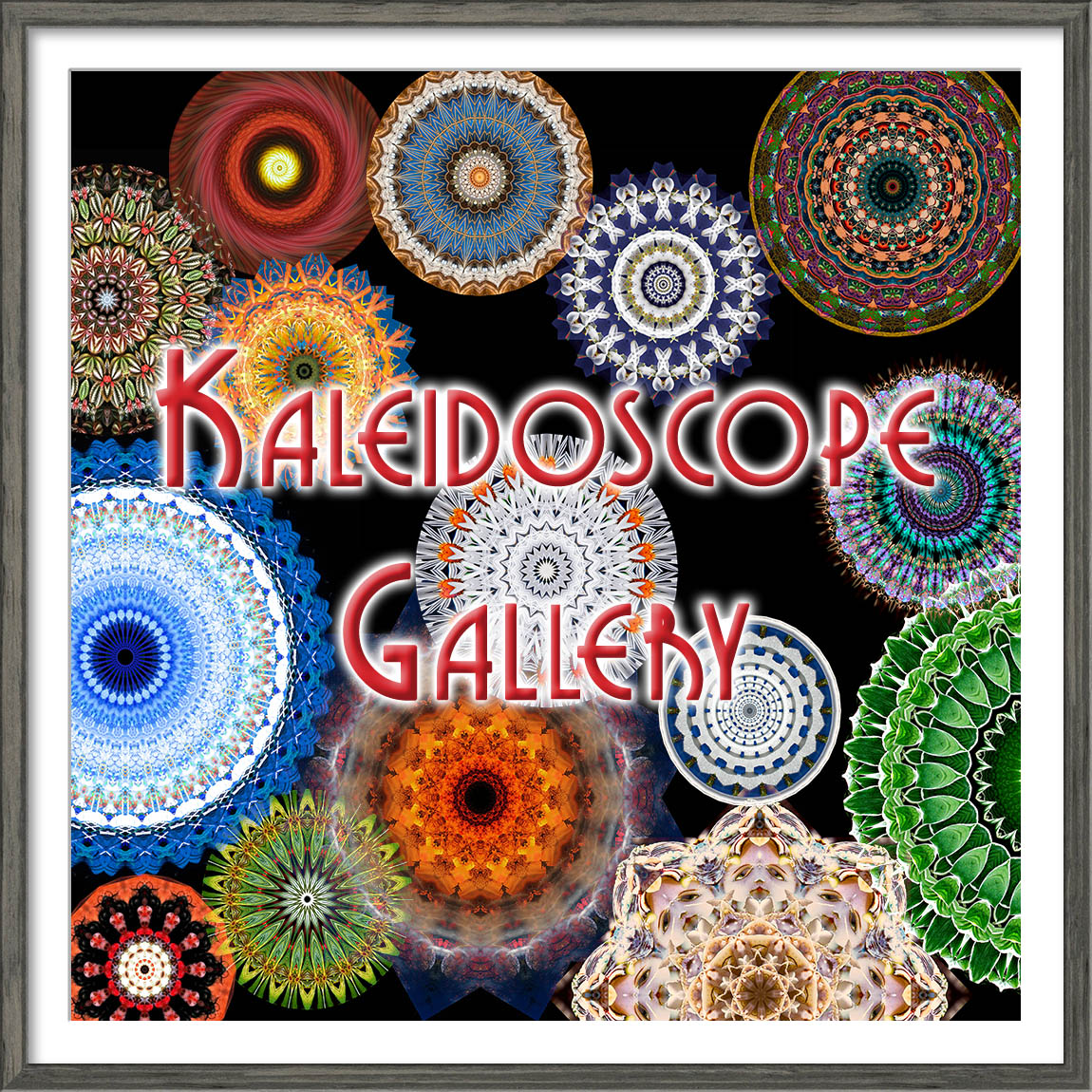
The kaleidoscopic images in the gallery and elsewhere in this section of the site, were all created using these scripts. The scripts are freely available for download from the link below and the Help section explains their usage.
Please note that the scripts will only work if you have Photoshop CC installed on your computer.
Photoshop & Scripting
3 scripting languages can be used with Photoshop:
- Visual Basic
- Javascript
- Applescript
My scripts were written using Javascript.